
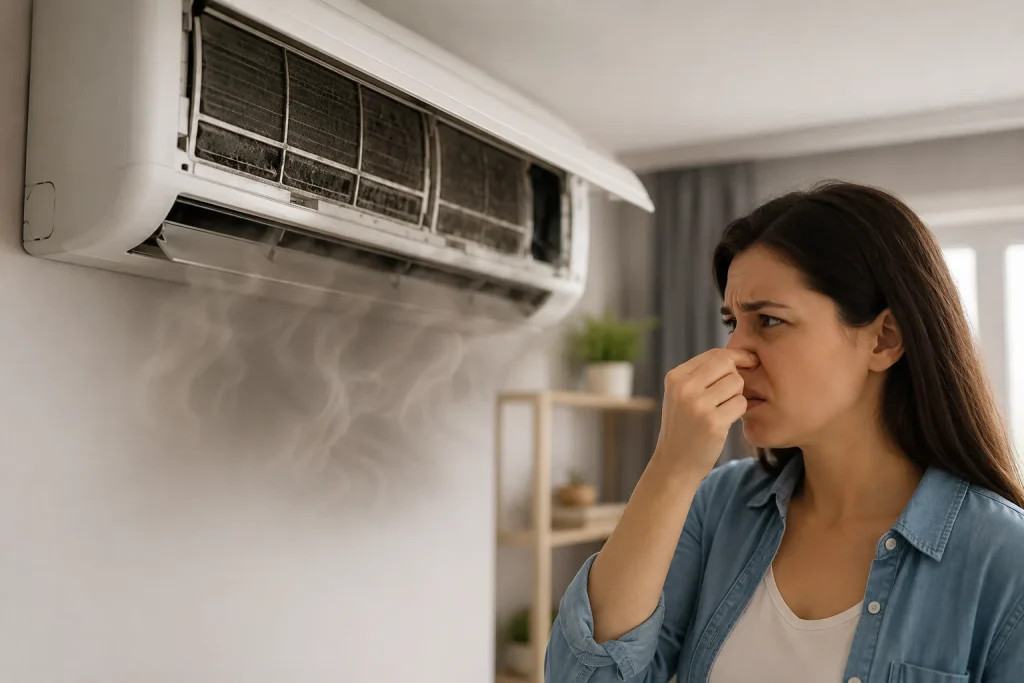
Air conditioners work almost year-round in Dubai, making them one of the most important appliances in any home or office. While most people focus on cooling performance, unusual odors coming from an AC unit are often overlooked until they become impossible to ignore.
A bad smell coming from your air conditioner is usually a sign that something inside the system needs attention. Whether it’s a musty odor, a burning smell, or a foul scent that spreads throughout the room, identifying the cause early can help prevent expensive repairs, improve indoor air quality, and keep your AC running efficiently during Dubai’s extreme temperatures.
Why AC Smells Are Common in Dubai
Dubai’s climate creates unique challenges for air conditioning systems. High temperatures, humidity, dust, and continuous AC usage place significant stress on cooling equipment throughout the year.
Because air conditioners operate for long periods, moisture and dust can accumulate inside critical components. Over time, this creates the perfect environment for mold, bacteria, and debris buildup that often leads to unpleasant odors.
Common reasons AC smell problems occur more frequently in Dubai include:
- Constant air conditioner usage
- High humidity levels during certain months
- Dust and sand entering the system
- Delayed maintenance schedules
- Dirty filters and clogged drain lines
Understanding the source of the smell is the first step toward solving the problem effectively.
Why Does My AC Smell Bad?
If your AC smells bad, the most common causes include mold growth, dirty air filters, clogged condensate drain lines, bacteria on evaporator coils, refrigerant leaks, electrical issues, or accumulated dust inside the system. The type of smell often helps identify the specific problem and determine whether professional repair is needed.
Common Types of AC Smells and What They Mean
Musty or Moldy Smell
A musty smell is one of the most frequently reported AC issues in Dubai homes and apartments.
This odor usually indicates mold or mildew growth inside the air conditioning system. Moisture naturally forms on the evaporator coils during cooling. When water doesn’t drain properly, mold can develop and spread through the system.
Common causes include:
- Dirty evaporator coils
- Blocked condensate drain pipes
- Excess moisture inside the unit
- Poor ventilation
- Delayed AC maintenance
If ignored, mold spores can circulate throughout your home and affect indoor air quality.
Dirty Sock Smell
Many homeowners describe this odor as similar to sweaty socks or damp clothing.
This smell is usually caused by bacteria growing on evaporator coils. When dust, moisture, and organic particles accumulate inside the system, bacterial growth increases and creates an unpleasant odor whenever the AC starts running.
Burning Smell
A burning smell should never be ignored.
Possible causes include:
- Overheated motors
- Damaged electrical wiring
- Faulty circuit boards
- Failing capacitors
- Electrical short circuits
Turn off the unit immediately if you notice a burning odor. Continued operation could damage the system or create a safety risk.
Rotten Egg Smell
A sulfur-like smell may indicate:
- Dead rodents or pests inside ductwork
- Bacterial contamination
- Nearby gas-related issues
Professional inspection is recommended whenever this odor appears.
Chemical Smell
A strong chemical odor can be associated with refrigerant leaks.
Low refrigerant levels reduce cooling performance and may place additional stress on the compressor. A technician should inspect the system as soon as possible.
Sewage Smell
Sometimes an AC system circulates odors from nearby plumbing problems.
Potential causes include:
- Blocked drain lines
- Contaminated drainage systems
- Sewer gas entering ventilation pathways
The source may not be the AC unit itself, but the smell can still spread through the cooling system.
Health Risks of a Smelly Air Conditioner
Many people assume unpleasant odors are simply a comfort issue. In reality, they may impact both health and indoor air quality.
Possible effects include:
- Sneezing
- Coughing
- Eye irritation
- Headaches
- Allergy symptoms
- Respiratory discomfort
Individuals with asthma, allergies, or other respiratory conditions may be particularly sensitive to mold and bacteria circulating through a contaminated AC system.
How Dirty Air Filters Cause Bad AC Smells
Air filters are designed to capture airborne contaminants before they enter the system.
Over time, filters collect:
- Dust
- Pet dander
- Pollen
- Sand particles
- Airborne debris
When filters become clogged, airflow decreases, and moisture becomes trapped inside the unit. This environment encourages bacterial growth and unpleasant odors.
Regular filter replacement helps maintain:
- Better airflow
- Improved indoor air quality
- Reduced odors
- Greater energy efficiency
The Hidden Problem of Clogged Drain Lines
Every air conditioner removes moisture from indoor air.
This moisture exits through a condensate drain line. When the drain becomes blocked, water accumulates inside the unit.
Standing water can lead to:
- Mold growth
- Bacterial contamination
- Musty smells
- Water leaks
- Reduced system efficiency
Routine inspections can identify drainage issues before they cause major problems.
Why Evaporator Coils Often Become Smelly
Evaporator coils remain damp during normal operation.
As air moves across these coils, dust and debris stick to the moist surface. Over time, buildup accumulates and creates ideal conditions for mold and bacteria.
Dirty evaporator coils can cause:
- Unpleasant odors
- Poor cooling performance
- Higher electricity bills
- Increased wear on the system
Around this stage of the article, naturally place your service-page internal link:
For homeowners experiencing persistent odor problems, professional Air Condition Repair Services can identify hidden issues such as coil contamination, drainage blockages, and refrigerant-related faults before they lead to expensive breakdowns.
Signs It’s Time to Call a Technician
Some AC smells can be resolved through basic maintenance. Others require professional expertise.
Contact a technician if:
- The smell remains after changing filters
- Cooling performance decreases
- Water leaks are visible
- Strange noises occur
- Electrical smells develop
- The odor becomes stronger over time
Professional diagnostics can identify underlying issues that are not visible during routine inspection.
How to Prevent AC Odors in Dubai
Preventive maintenance is the most effective way to avoid unpleasant AC smells.
Replace Filters Regularly
Clean filters reduce contamination and improve airflow.
Schedule Routine Maintenance
Professional servicing helps identify small problems before they become major repairs.
Keep Air Vents Clean
Dust accumulation near vents can contribute to odors.
Monitor Indoor Humidity
Balanced humidity levels reduce mold growth inside the system.
Check Drain Lines
Regular inspections help prevent standing water and bacterial growth.
Address Minor Problems Quickly
Ignoring warning signs often leads to larger repair costs later.
Why Professional Maintenance Saves Money
Many homeowners wait until an AC stops working before calling for service.
However, preventive maintenance often provides:
- Lower energy bills
- Better cooling efficiency
- Improved air quality
- Fewer emergency repairs
- Longer equipment lifespan
At approximately 60% of the article, place the homepage brand link naturally:
Many Dubai residents trust Quick FixIt for routine maintenance and professional inspections that help keep air conditioning systems operating efficiently throughout the year.
Conclusion
A bad smell coming from your air conditioner is more than just an inconvenience. It is often an early warning sign that your system requires attention. From mold growth and clogged drain lines to dirty filters and electrical problems, identifying the source of the odor quickly can help prevent costly repairs and maintain healthy indoor air quality. Regular maintenance, timely filter replacement, and professional inspections are the most effective ways to keep your AC operating efficiently in Dubai’s demanding climate. By addressing odor issues early, homeowners can enjoy cleaner air, better cooling performance, and a longer-lasting air conditioning system.
Frequently Asked Questions
1. Why does my AC smell musty?
Musty odors are usually caused by mold or mildew growth inside the unit.
2. Can dirty filters cause bad smells?
Yes. Dirty filters trap contaminants that contribute to unpleasant odors.
3. What does a burning smell from an AC mean?
It often indicates electrical issues or overheating components.
4. Is mold inside an AC dangerous?
Mold can negatively affect indoor air quality and trigger allergies.
5. Can a refrigerant leak create odors?
Some refrigerant leaks may produce a chemical-like smell.
6. How often should filters be replaced?
This depends on usage, but monthly inspection is recommended.
7. Why does my AC smell worse during summer?
Continuous operation increases moisture buildup and contamination.
8. Can blocked drain lines cause odors?
Yes. Standing water often leads to mold and bacterial growth.
9. Should I clean AC vents regularly?
Yes. Clean vents help improve airflow and indoor air quality.
10. When should I call a technician?
If odors persist after basic maintenance or are accompanied by performance issues.

Mansoor Ahmad is the Manager at Quick FixIt, with hands-on experience in home maintenance and repair services. He focuses on delivering reliable solutions and sharing practical tips to help homeowners keep their properties in top condition.