
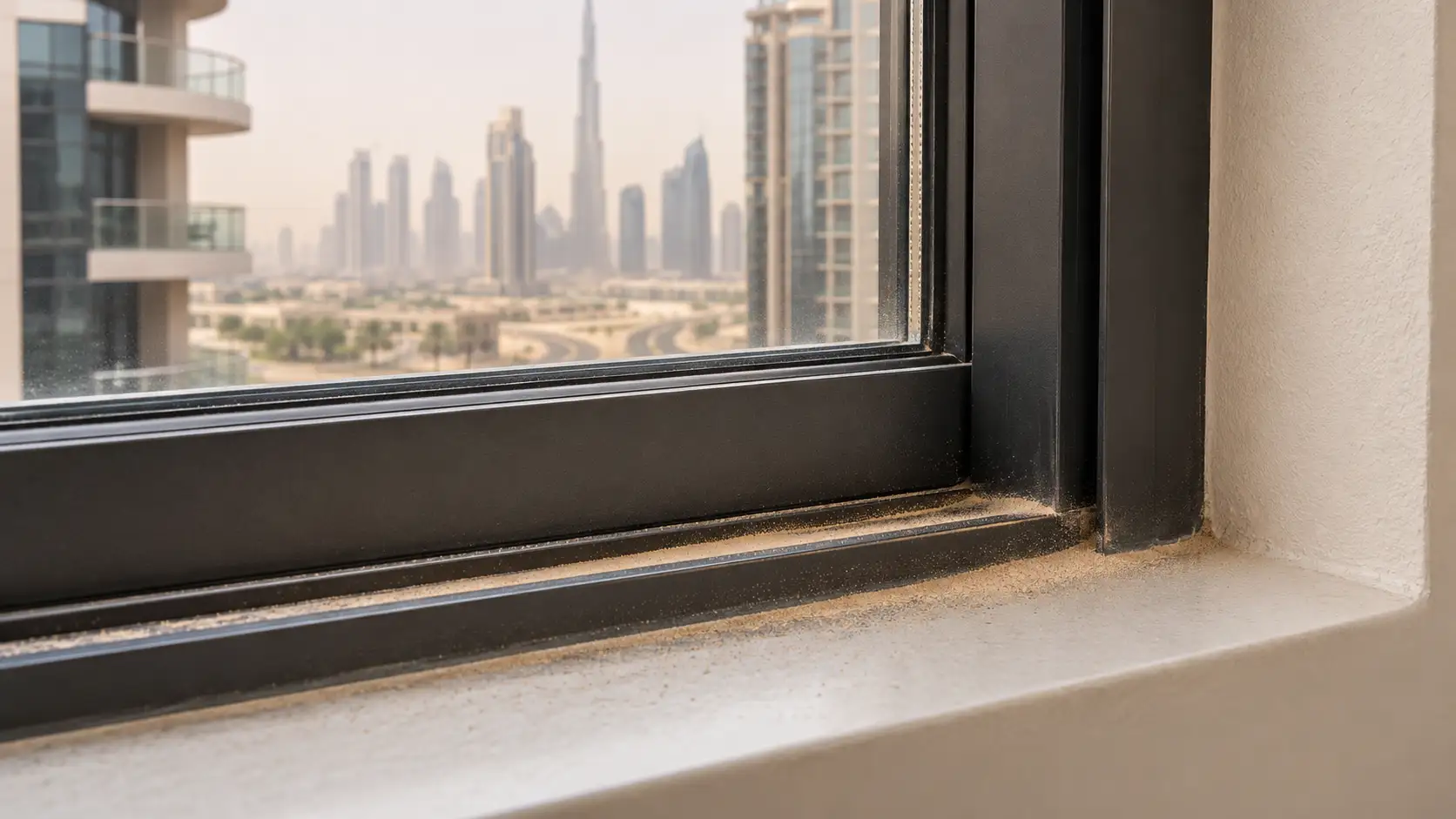
If you wipe your windowsill in the morning and find a fresh line of dust by evening, look at where it comes back first. A narrow streak near the lock, a pile in one corner of the sliding track, and dust along the frame-to-wall joint point to different places worth checking.
Closed aluminium windows can let in dust when outdoor air finds a gap around the moving panel, the glass gasket, or the fixed frame. Worn brush seals, a panel that sits slightly crooked, and cracked perimeter sealant are all possible causes. The right repair depends on which part of the window is letting air through.
Before buying a roll of foam tape or pricing a new window, clean the sill and check how the window closes. What you find can narrow the job down to a new seal, a hardware adjustment, or a repair around the frame.
How to Tell Where Dust Is Getting In
Clean the sill and watch where the dust returns
Vacuum the accessible track with a soft brush attachment, then wipe the indoor sill with a damp microfibre cloth. Close and latch the window as usual. Check the same spots again after a windy afternoon or the next time there is visible dust outdoors. Take a photo if a distinct line or patch appears.
Pay attention to which side of the track collects the grit. Dust in an outer channel can accumulate when you open the window or when the frame is exposed to outdoor conditions. Fresh dust repeatedly appearing on the room side of a closed window gives you a more useful starting point.
| What you notice | Where to look first |
| Dust at the vertical join where two sliding panels overlap | The brush seals and how the panels meet |
| Grit near the latch, with a gap that looks wider at one end | The latch, rollers, guides, and panel alignment |
| Dust where the fixed frame meets the plaster | The perimeter sealant and surrounding joint |
| A dusty line along the edge of the glass | The glazing gasket and whether it sits evenly |
| An even layer on the sill, shelves, and furniture | Other dust sources, including doors, vents, and fabrics |
Check how the window closes and latches
Open the window a short distance and slide it shut gently. Does it scrape, lift slightly, or need a final push before the latch catches? Look at the gap between the panel and frame from top to bottom. If one end touches while the other leaves a visible gap, note it before you look for replacement seals.
On a breezy day, hold a narrow strip of tissue just inside the suspected joint with the window closed. Compare several points along the frame. Movement concentrated at one spot can help you locate a draught. A still strip on a calm day tells you very little, so check it against the dust pattern and how the window closes.
Why Closed Aluminium Windows Let Dust In
Worn brush seals or rubber gaskets
Many sliding windows use brush seals, also called pile weatherstripping, along the rails and where the panels overlap. Look for bristles that have flattened, worn away, or pulled back from the ends. Hinged windows often use a rubber gasket that compresses when the sash closes. A split or flattened section can leave a gap even with the handle locked.
Grit in the track or a misaligned panel
A little grit at the end of a sliding track can keep the panel from travelling fully home. Vacuum the track and try closing it again. If it still drags, rattles, or catches the latch only when you lift the handle side, have the rollers, guides, and latch checked together. A panel that sits low at one corner can leave a gap even when the brush seal looks intact.
A gap between the fixed frame and the wall
A window can slide smoothly and latch firmly while air gets in around its outer frame. From inside, follow the line where the aluminium meets the plaster or trim. A draught near a split in that joint is a clue that the opening needs attention. If there are also water marks or peeling paint, mention them during the inspection. They help the technician decide whether the joint needs a straightforward reseal or a closer look at how water is getting around the opening.
A loose gasket where the glass meets the frame
Look for rubber lifting at a corner, pulling away from the glass, or leaving a short open section. This gasket sits around the pane and serves a different purpose from the seal around the moving panel. If the glass rattles when you operate the window, stop using it and arrange an inspection. The technician can assess how securely the pane is held and whether the existing gasket can be replaced.
If fresh dust keeps returning along the same edge after cleaning, an inspection can narrow down what needs fixing before you order parts. For worn seals, closing problems, or gaps around the frame, you can book aluminium window repair in Dubai. A photo of where the dust settles and another of the window fully latched can help explain the problem.
Which Repair Will Stop Dust From Coming Through?
Replace the seal with a profile that fits
Seal replacement makes sense when the frame is sound, the panel closes evenly, and the old brush or gasket has visible wear. Sliding seals need to match the channel and make enough contact to close the gap while allowing the panel to move freely. A strip that is too thick can make the window stiff and keep the latch from engaging fully.
Before buying replacement weatherstripping, take clear photos of the existing seal, including its end if you can see it. The shape of the backing and the height of the bristles matter. On a hinged window, the gasket needs to fit its groove and compress evenly when the sash is latched.
Adjust the panel or replace worn hardware
If the sliding panel drops at one end, a technician can check whether the rollers are adjustable or worn out. The track and guides also matter. A damaged section of track can cause a new roller to run poorly, and shifting the latch alone can leave the panel sitting unevenly against the seal.
After the adjustment, slide the window through its full travel and close it a few times. It should reach the closing edge without being lifted or shoved, and the latch should engage with normal pressure. Ask the technician to show you the point where the panel now meets the seal.
Reseal the fixed frame where it meets the wall
When air is coming through a failed perimeter joint, the repair may involve removing loose sealant, preparing the surfaces, and applying a compatible product. A deeper or irregular gap may need backing or further investigation. The material and method depend on the joint’s width, condition, and exposure.
Keep the frame’s drainage slots clear. These small openings let water escape from the track to the outside. If you suspect a missing drain cover or another part around the sill, ask for a check against the window design before applying silicone.
If you are unsure whether the dust is coming through the sash or around the fixed frame, tell Quick Fixit where you first see it and how the window behaves when you latch it. Mention any water marks or difficulty reaching the window from outside so the team can assess the scope and access needed.
When Is Window Replacement Worth Considering?
Repair is usually worth exploring when you can identify one worn part and the rest of the window is in good condition. For example, a square, secure frame with a sliding panel that closes smoothly and a short section of missing brush seal is a good candidate for a targeted repair.
Replacement becomes more practical if the frame is badly distorted, several joints are failing, or compatible parts are unavailable. Ask for an itemised quote that explains the fault, what the proposed repair covers, and whether there are separate charges for parts or outside access. If you rent or live in a managed building, check with the landlord or building management before approving changes to the exterior frame.
Also compare the dust pattern at the window with what you see near the balcony door. If both thresholds collect fresh grit, check each opening independently. A door that drags or leaves a gap when latched can be a second route for dust. See which aluminium and glass door faults can affect how a balcony door closes.
How to Check Whether the Repair Worked
Clean the sill and inner track as soon as the work is finished so you have a fresh starting point. Make sure the window opens smoothly, closes evenly, and locks without extra pressure. If the repair involved work around the sill, ask the technician to point out the drainage openings.
After the next dusty or windy day, check the exact spot you photographed before the repair. An occasional light layer across the room can come from several sources. A fresh streak in the same place is more useful feedback. Photograph it and tell the technician whether the window was latched and what the weather was like when it appeared.
Need help finding the gap? Call +971 56 321 7714 to arrange a window inspection in Dubai. Have a photo of the whole window and a close-up of the dusty area ready. If more than one room is affected, say which window shows the clearest pattern. Quick Fixit
Frequently Asked Questions
Can dust come through closed aluminium windows?
Yes. Outdoor air can carry fine dust through gaps around the sliding or hinged panel, at the edge of the glass, or between the frame and the wall. A line of dust that keeps returning to one joint after cleaning makes that joint a sensible place to start.
How do I stop dust coming through sliding windows?
Clean the track, latch the window fully, and check where the two panels overlap. If the brush seal is worn, replace it with a compatible profile. If the panel closes unevenly or scrapes, have the rollers and alignment checked so the new seal can make even contact.
Can I use silicone to seal an aluminium window?
A compatible sealant can repair certain gaps at the fixed frame-to-wall joint. Moving parts usually need weatherstripping that lets the window open and close. Keep the drain slots clear and follow the window manufacturer’s instructions when choosing a sealant.
Do window screens keep Dubai dust out?
An ordinary insect screen can catch some larger debris, while fine airborne dust can still pass through the mesh. With a closed window, repairing the gap around the sash or frame addresses the route the dust is using.
Will double glazing stop dust from coming in?
Double glazing can improve thermal performance. Dust entry around a closed window still depends on how well the sash, seals, frame, and wall joint fit together. If the draught is at the latch or where the frame meets the wall, have that spot inspected before spending money on new glass.
How much does it cost to fix a dusty aluminium window in Dubai?
The cost depends on the fault, the window system, the availability of compatible parts, and access. A brush-seal replacement, a roller repair, and exterior resealing involve different work. Ask for a quote based on the diagnosed fault so you can see what the price covers.

Mansoor Ahmad is the Manager at Quick FixIt, with hands-on experience in home maintenance and repair services. He focuses on delivering reliable solutions and sharing practical tips to help homeowners keep their properties in top condition.