
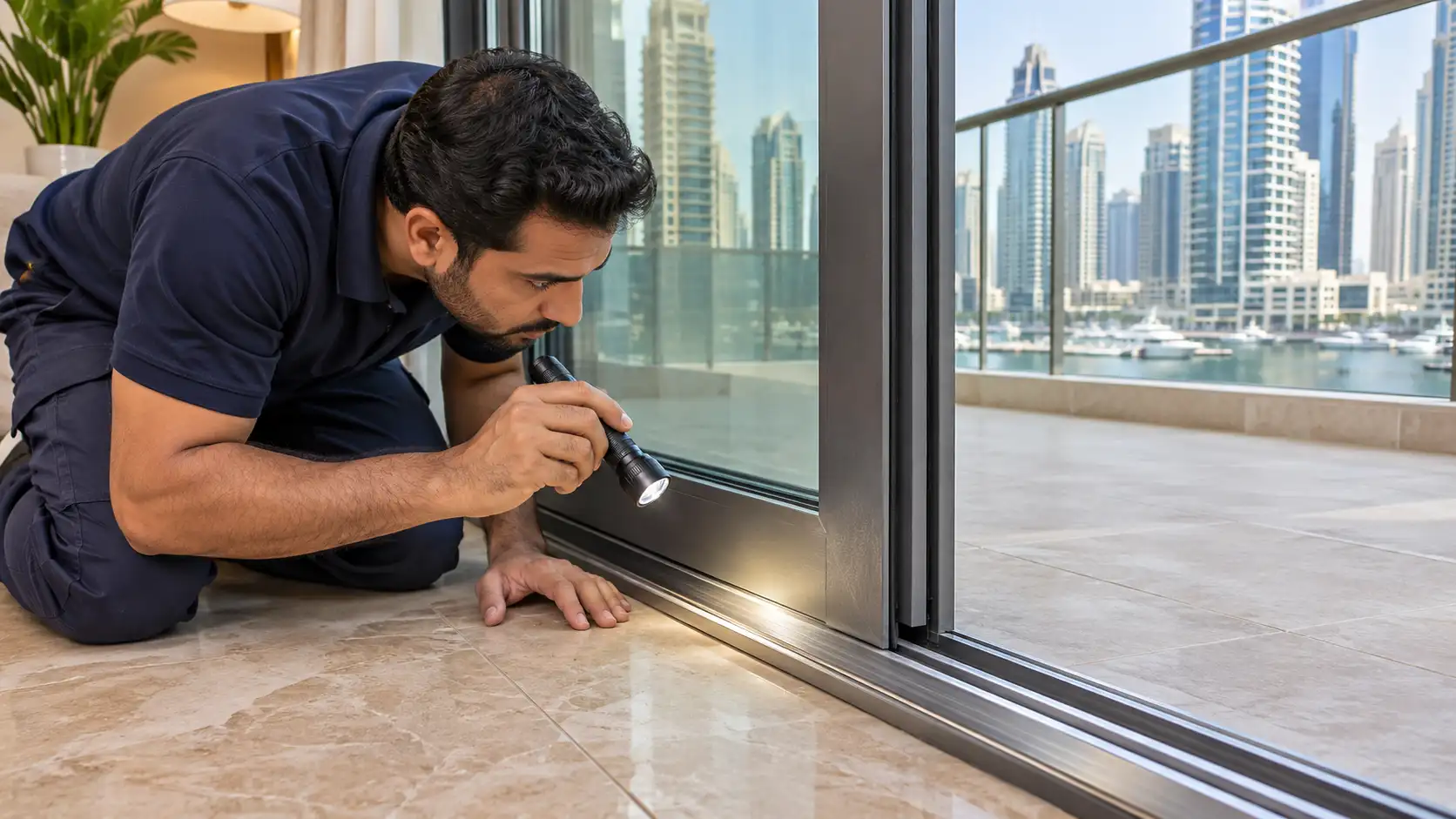
If your sliding balcony door feels heavy along most of its travel, the rollers may be worn, seized or out of adjustment. If it catches at the same spot every time, check that section of the track for trapped grit, a dent or a raised edge. If the door slides freely until the last few centimetres, panel alignment or the lock may be the issue.
A roller adjustment or replacement can restore smooth movement when the track and frame are still sound. A damaged running rail may need a compatible repair or replacement, and sometimes the rollers and rail are both worn. The condition of those parts determines how much of the existing door you can keep.
How to tell whether the rollers, track or alignment are causing the problem
If the glass is intact and the panel sits securely in the frame, pay attention to where the door gets difficult to move. The point at which it drags, bumps or scrapes is often more useful than how loud it sounds.
| What you notice | What to check first |
| The door feels heavy almost the whole way | Worn or seized rollers, debris along the track, or a panel set too low |
| The door bumps at the same point when opening and closing | Grit, a dent, a raised edge or damage to the running rail |
| The door makes a repeating bump as it moves | A damaged roller wheel, especially if the bumps occur at regular intervals |
| One bottom corner scrapes against the sill | Uneven roller height, a failing roller or a misaligned panel |
| The door moves easily but stops short of closing | The closing edge, seals, panel alignment and lock keeper |
| The panel tilts, jumps or feels loose in the frame | Stop using it and have the rollers, guides and frame inspected |
First, check that you’re moving the glass panel
Some Dubai apartments and villas have a separate sliding insect screen beside the balcony door. If the screen sticks but the glass door moves easily, the fault may be limited to the screen’s smaller wheels or its own track. Test each panel separately only if both sit securely in their guides.
If the glass panel itself drags, catches or needs to be lifted by the handle to close, Quick Fix It can assess the sliding system. When booking, mention whether the problem happens across the full opening, at one spot or only when the door reaches the lock. That detail gives the technician a useful starting point.
What you can safely check before booking a repair
Clean the exposed track and check for one specific snag
Sand and fine dust can collect in an exposed balcony track, particularly after windy weather or nearby construction. A small stone or a hard clump of dirt may feel like a damaged rail when a wheel rolls over it.
If the panel moves without force, vacuum loose grit from the accessible part of the track. Use a soft brush or damp cloth to lift stubborn dirt, then dry the channel. Pay attention to the narrow raised rail the wheels run on as well as the wider grooves beside it.
Move the door slowly again. If it still catches in the same spot, use a torch to look for a dent, a lifted seam or a worn section of rail. A close-up photo taken from inside can help the technician locate the problem during the visit.
Look at the gap where the door meets the frame
On a stable door that moves safely, bring the panel close to the side jamb and look at the narrow gap from top to bottom. If the gap is wider at one end, the moving panel may be sitting out of square. A roller may have dropped, an adjustment may be uneven or the frame itself may be out of alignment.
Also note what happens when you try to lock the door. If the lock works only when you lift or push the panel into position, include that detail when you book. It helps the technician decide whether to check panel height before adjusting the lock.
Know when to leave the door alone
Stop moving the door if the glass is cracked, the panel visibly tilts, or the door has jumped out of its guide. Keep people clear of the opening and arrange an assessment. If the door cannot be secured, tell the repair team and, if you live in a managed building, notify building management.
Leave panel removal to a technician. Large balcony doors can be heavy and awkward to support, and the glass or frame may already be under stress. For routine cleaning or lubrication, follow the door manufacturer’s instructions. Some systems call for dry lubricant on the rollers and specify that the running rail should stay dry.
When roller adjustment or replacement makes sense
Roller work is the first option to consider when the panel drags or sits unevenly and the running rail remains straight and secure. The technician checks whether the existing wheels still turn properly and whether the door can be set at the correct height.
If the panel is heavy, noisy or difficult to lock, book an assessment through our aluminium and glass repair service in Dubai. We check the rollers, running rail, guides and lock together so the quote addresses the cause of the problem.
Adjust the rollers when the wheels still run smoothly
On systems with adjustable rollers, each end of the sliding panel can be set to the proper height. This can help when one corner rubs against the sill or the closing edge meets the frame unevenly.
The technician should check the door through its full travel after the adjustment. The closing gap should be even, the door should stay properly engaged in its guides, and the lock should work without you having to lift the panel by the handle.
Replace the rollers when the wheels or housings are worn
A flat spot on a wheel can cause a regular bump. A seized bearing can make the panel feel heavy along most of the track. A damaged roller housing can let one side of the door sit low, causing scraping even after the exposed track has been cleaned.
Replacement rollers need to suit the door. Wheel profile, housing dimensions, adjustment range and load rating can all affect fit. Two rollers that look similar may sit at different heights or make contact with the rail differently. If one roller has failed, ask the technician to check the other assembly for wear during the same visit.
When the sliding door track needs repair or replacement
A track problem becomes more likely when the door catches at a fixed point after cleaning or when the running rail shows visible damage. The next question is whether the damage affects a removable insert, a rail that can accept a compatible cover, or the sill itself.
A removable rail or compatible track cover may be enough
Some sliding systems have a removable running rail that can be replaced while keeping the surrounding sill and frame. A compatible track cover may also be an option on certain systems if the base is firm and there is enough clearance for the panel and rollers.
The rail or cover must suit the wheel profile and preserve proper door height. It also needs to leave the sill’s drainage working as designed. For an exterior balcony door, checking how water exits the threshold matters as much as checking how the door slides.
A bent or loose sill may need more extensive work
If the sill is twisted, loose or badly worn, fitting new rollers can leave the panel running over the same uneven base. If the track is part of the sill, replacing that section may also affect the frame, seals or surrounding finishes.
Ask the technician to identify the damaged part in the quote. “Track replacement” can mean replacing a narrow rail insert or carrying out more involved work at the threshold. The distinction matters when you compare prices, timings and what will be disturbed during the repair.
Sometimes the rollers and track both need attention
A worn wheel can run unevenly on a rail, and a damaged rail can put repeated stress on replacement wheels. A door that bumps at one point and drags throughout the rest of its travel is worth checking for both faults.
If the inspection finds a loose frame, damaged lock or cracked glazing as well, our guide to aluminium and glass door repair in Dubai covers those related issues and when they need separate attention.
What affects the cost of sliding balcony door repair in Dubai?
The cost depends on the confirmed fault, the parts available for your door and the work needed to access them. An adjustment, roller assembly replacement and sill repair each involve a different scope.
When comparing quotes, ask whether they include:
- Inspection and labour, including removal and refitting of the moving panel if needed.
- Replacement parts, with the number of roller assemblies or the exact rail component identified.
- Alignment and lock testing after the door is put back into service.
- Seals, drainage or finishing work if the repair affects the threshold.
- Any return visit if a matching roller or track component needs to be sourced.
A photo can help narrow down the issue, particularly if there’s an obvious dent or visible scrape mark. Hidden roller wear and movement in the sill are harder to confirm remotely. If you receive an initial estimate from photos, ask what the technician needs to verify on site before the price is finalised.
What to send when booking a balcony door repair
A short description and a few clear photos can help us discuss the likely repair before visiting your Dubai apartment or villa. Send what you can capture from inside without forcing the door.
- A photo of the full door, including the fixed panel and frame.
- A close-up of the lower track and any dent, scrape or worn section.
- A photo of any accessible brand label or marking on the frame.
- Whether the door catches in one spot, drags all the way or only fails to close or lock.
- Your Dubai neighbourhood and any building access or contractor booking requirements.
If you rent, contact your landlord or property manager before approving work. If the proposed repair affects the exterior frame or threshold, ask building management about access and any building-specific requirements. Clarifying these details early is especially useful when a large glass panel may need to come out.
How to keep a balcony door sliding smoothly after repair
Check the exposed track after dusty or windy days and clear grit before it builds up at the ends of the rail. On balconies exposed to coastal air, look for roughness around metal fittings and mention it if the door starts moving differently.
Keep the sill’s visible drainage paths clear. If water collects in the channel after rain or washing the balcony, note where it pools. That gives the technician a more useful clue than the fact that the track gets wet.
After a repair, try the door before the technician leaves. Slide it through its normal range, close it gently and check that the lock engages without lifting the handle or pushing the panel sideways. If you previously felt a bump at a particular point, test that same section on the way open and closed.
Frequently asked questions
1. Why is my sliding balcony door suddenly hard to open?
Debris in the track, a wheel that has seized, an impact to the rail or a panel that has shifted can cause sudden resistance. If the panel is stable and the glass is intact, check the exposed track for an obvious obstruction. Arrange an inspection if the door still jams or feels loose in its guides.
2. Can sliding balcony door rollers be repaired without replacing the whole door?
Yes. Many doors can keep their existing glass panel and frame if those parts are sound and compatible rollers are available. Depending on what the inspection finds, the technician may adjust the existing rollers or replace the worn assemblies.
3. Can a sliding door track be replaced without changing the frame?
Yes, on some systems. A separate running rail may be replaceable within the existing frame. When the track is integral to the sill or the base is damaged, the repair can be more involved. Ask whether the quote covers a rail insert, a track cover or sill work.
4. Why does my balcony door get stuck only in the middle?
A catch at the same point in both directions often points to grit or a damaged section of the running rail. If the door bumps at several evenly spaced points as it moves, a damaged wheel is another possibility. Cleaning the visible track helps narrow down the cause.
5. Should I spray WD-40 on a sliding balcony door track?
Check the door manufacturer’s care instructions before applying any lubricant. Some specify a dry lubricant on the rollers and a clean, dry track. Start by removing visible debris. If the door still grinds or catches, have the rollers and rail checked.
6. Why does my sliding balcony door close but refuse to lock?
The latch may be missing the keeper because the panel is sitting too low or out of square. A worn lock can also cause the problem. Tell the technician whether the lock works when you lift the panel, as that can help distinguish an alignment issue from a faulty lock.
7. Is a grinding noise a sign that I need new rollers?
Grinding can come from a worn or seized roller, a rough rail or a panel scraping the sill. If the noise continues after the accessible track is clean, have the rollers and rail inspected together. Mention whether the noise happens throughout the movement or near one spot.
8. How long does sliding balcony door repair take?
A straightforward adjustment may be completed during the assessment visit. Roller replacement depends on having compatible parts and safe access to the panel. An older door that needs a specific roller assembly or rail profile may require a return visit once the part is sourced.
9. Can new rollers stop dust or hot air coming in around the balcony door?
They can help if worn rollers have left the panel sitting unevenly and prevented it from closing against the seals. If the door closes evenly and you still notice a draught, the technician should check the weatherstripping and the gaps around the frame separately.
10. When should I replace the entire sliding balcony door?
Consider full replacement if the frame or sill is badly distorted, the panel cannot be safely supported, or compatible parts are unavailable. Ask the technician which component makes a targeted repair impractical and what a replacement quote includes for the glass, frame, threshold and finishing.
Book a sliding balcony door assessment in Dubai
If your balcony door takes two hands to open, scrapes across the sill or only locks when you lift it, tell us exactly what happens and where in its travel it occurs. Quick Fix It can inspect the door and explain whether adjustment, new rollers or work on the track makes sense for your existing system.
Request a sliding balcony door repair assessment or call +971 56 321 7714.

Mansoor Ahmad is the Manager at Quick FixIt, with hands-on experience in home maintenance and repair services. He focuses on delivering reliable solutions and sharing practical tips to help homeowners keep their properties in top condition.